Efficiency of Activated Carbon in Gold Recovery for Mining
Maximizing Efficiency with Activated Carbon in Gold Recovery
In the competitive world of precious metal mining, the efficiency of extraction determines the profitability of the entire operation. The use of activated carbon in gold recovery has revolutionized the industry by providing a highly selective and efficient method for capturing gold from cyanide leach solutions. Through a process known as Carbon-in-Pulp (CIP) or Carbon-in-Leach (CIL), gold-cyanide complexes are adsorbed onto the porous surface of the carbon. This technical approach not only increases the overall recovery rate but also reduces the operational costs associated with traditional precipitation methods. Understanding the nuances of carbon selection and management is essential for any mining operation aiming for peak performance.

The Mechanism of Adsorption in Gold Mining
The core of activated carbon in gold recovery lies in its extraordinary internal surface area and pore structure. Gold is typically dissolved using a cyanide solution, forming a soluble aurocyanide complex. When the activated carbon is introduced, these complexes migrate into the micropores of the carbon via diffusion and bind to the surface. This physical adsorption process is highly efficient because the carbon acts as a "sponge," concentrating the gold from a large volume of dilute solution onto a small volume of solid material. The effectiveness of this process depends heavily on the carbon's activity, hardness, and the pH level of the solution.
Pro Tip: Maintaining a consistent particle size of the activated carbon is critical to prevent "carbon fines" from escaping the recovery circuits, which can lead to significant gold loss.
Comparing CIP and CIL Processes using Activated Carbon
Mining engineers typically choose between Carbon-in-Pulp (CIP) and Carbon-in-Leach (CIL) depending on the ore characteristics. In CIP, leaching is completed before the gold is adsorbed by carbon. In CIL, leaching and adsorption happen simultaneously. The latter is particularly advantageous when the ore contains "preg-robbing" materials—natural organic carbon that competes with the industrial activated carbon in gold recovery. By introducing the carbon during the leaching phase, the industrial carbon captures the gold before the natural minerals can, ensuring higher yields.
Optimizing the Quality of Activated Carbon in Gold Recovery
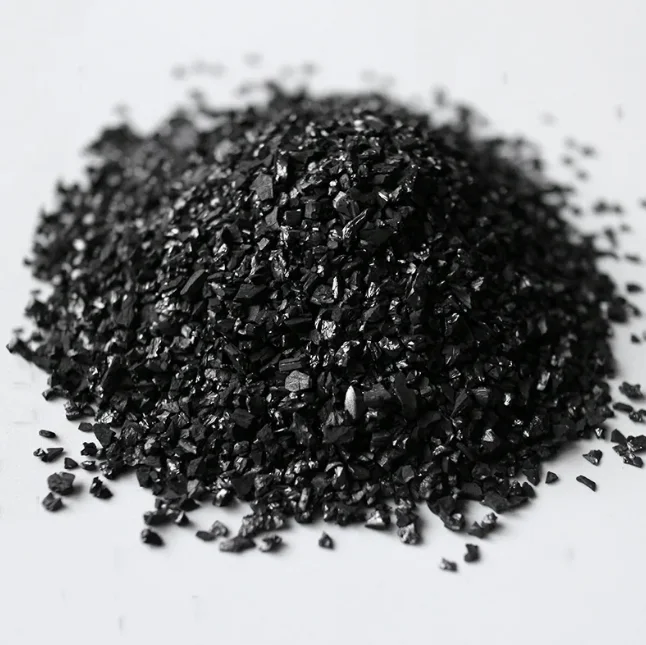
Not all carbon is created equal. For gold recovery, coconut-shell based activated carbon is the industry standard due to its high hardness and optimal pore distribution. The hardness is crucial because the carbon is subjected to constant abrasion within the agitator tanks. If the carbon breaks down too easily, it creates fines that carry gold out of the system. Therefore, selecting a high-quality activated carbon in gold recovery ensures that the material can withstand multiple cycles of loading and stripping without significant degradation.

Carbon Regeneration and Elution Cycles
The lifecycle of carbon does not end once it is loaded with gold. The gold must be "stripped" or eluted from the carbon using a hot caustic cyanide solution. After elution, the carbon is often contaminated with organic matter or calcium carbonate, which blocks the pores. This is where thermal or chemical regeneration becomes vital. By treating the activated carbon in gold recovery in a kiln at high temperatures, the impurities are burned off, restoring the carbon's activity for the next cycle. This circular process drastically reduces the need for fresh carbon replacement.
Technical Specifications for Gold Recovery Carbon
To ensure maximum gold adsorption, the carbon must meet strict technical parameters. The iodine number serves as a primary indicator of the carbon's adsorption capacity, while the abrasion resistance index ensures longevity. Below are the typical specifications for premium grade activated carbon in gold recovery used in modern industrial mines:
Conclusion: Optimizing Gold Yields with Premium Carbon
The strategic application of activated carbon in gold recovery is more than just a processing step; it is a critical factor in the economic viability of a mine. By selecting high-hardness coconut-shell carbon and maintaining rigorous regeneration protocols, operators can maximize their gold recovery while minimizing waste. As mining ores become more complex, the reliance on superior adsorption technology continues to grow. Investing in high-quality carbon and optimized CIL/CIP circuits is the most effective way to ensure sustainable and profitable precious metal extraction.
Frequently Asked Questions (FAQs)
Why is coconut shell carbon preferred for gold recovery?
Coconut shell carbon is preferred because it possesses a high density of micropores, which are perfectly sized to capture gold-cyanide complexes. More importantly, it is significantly harder than coal-based or wood-based carbons. In the turbulent environment of a gold recovery tank, the carbon is constantly colliding with ore particles. Coconut shell carbon's superior abrasion resistance prevents it from breaking into small fragments (fines), which would otherwise result in gold being lost through the tailings discharge.
What is "preg-robbing" and how does carbon help?
Preg-robbing occurs when natural organic carbon or carbonaceous minerals present in the ore absorb the dissolved gold before the industrial recovery system can. This leads to a significant drop in gold recovery rates. By using a Carbon-in-Leach (CIL) process, industrial activated carbon in gold recovery is added directly to the leaching tanks. This creates a competitive environment where the added carbon, which has a higher affinity for gold, "out-competes" the natural minerals, effectively capturing the gold as soon as it is dissolved.
How often should activated carbon be regenerated?
The frequency of regeneration depends on the ore chemistry and the elution efficiency. Generally, carbon is regenerated after every few elution cycles. Over time, "poisoning" occurs, where organic contaminants or mineral scales (like calcium carbonate) coat the internal pores of the carbon, reducing its adsorption capacity. Thermal regeneration in a rotary kiln at temperatures above 600°C is the most effective way to burn off these contaminants and restore the carbon to its original activity level.
What is the difference between loading and stripping?
Loading is the adsorption phase where gold-cyanide complexes from the slurry attach to the surface of the activated carbon. Stripping (or elution) is the reverse process, where the gold is chemically forced off the carbon using a high-temperature, high-pressure solution containing caustic soda and cyanide. The resulting concentrated "pregnant" solution is then processed via electrowinning or zinc precipitation to recover the solid gold metal.