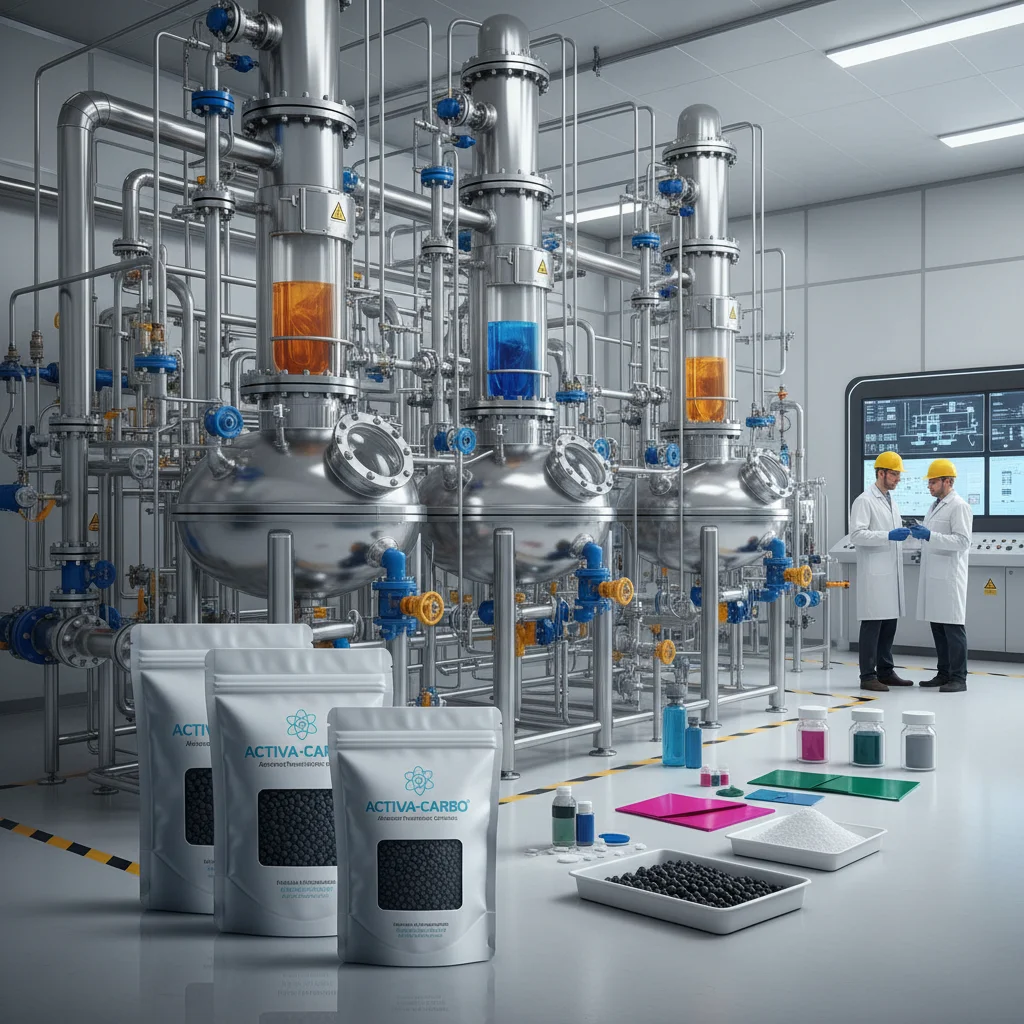
The global industrial landscape relies heavily on specialized chemical agents to ensure purity and efficiency across various manufacturing sectors. Among these, the concept of purification and adsorption, often associated with materials like activated carbon and activated charcoal, plays a pivotal role in removing impurities from liquids and gases. Understanding the synergy between chemical reagents and filtration media is essential for optimizing production yields and ensuring environmental compliance.
In the realm of inorganic salts, sodium sulfide emerges as a critical component, particularly in mining and textile industries. While its function differs fundamentally from the porous nature of carbon-based filters, both are essential tools in the chemical engineer's toolkit. The ability to manage chemical reactions through precise agents, while maintaining the purity of the final product, defines the success of modern industrial processing.
Whether you are dealing with ore flotation or the manufacture of dyes, the integration of high-quality reagents and advanced filtration techniques—such as the use of activated carbon and activated charcoal—ensures that industrial outputs meet stringent global standards. By balancing the reactive power of sodium sulfide with the purifying capabilities of adsorption media, companies can achieve unparalleled operational excellence.

Global Relevance of Industrial Adsorbents
In today's interconnected global economy, the demand for high-purity chemicals and clean water has never been higher. Industries ranging from pharmaceutical manufacturing to wastewater treatment rely on the ability to strip contaminants from a medium efficiently. The widespread implementation of activated carbon and activated charcoal has become a global standard for achieving these purity levels, adhering to ISO standards for environmental safety.
The challenge lies in the increasing complexity of industrial waste. As chemical processes become more intricate, the need for robust adsorption materials grows. This is particularly evident in regions with rapid industrialization where the balance between production growth and environmental preservation is a critical socio-economic challenge.
Defining Activated Carbon and Activated Charcoal
To the layperson, the terms may seem interchangeable, but in a technical context, activated carbon and activated charcoal refer to carbonaceous materials that have been processed to have small, low-volume pores that increase the surface area available for adsorption. This "activation" process—usually involving high temperatures and chemical agents—creates a molecular sieve capable of trapping organic compounds and pollutants.
From a humanitarian perspective, these materials are lifesavers. They are the primary components in emergency water filtration systems used by NGOs in disaster-stricken areas, providing immediate access to potable water by removing toxins and odors. Their ability to function without complex electricity makes them indispensable in remote industrial zones and developing nations.
Within the chemical industry, these materials are often used in conjunction with other agents. For instance, while sodium sulfide is used in ore flotation to separate minerals, carbon-based filters are subsequently used to treat the resulting process water, demonstrating a complete cycle of chemical intervention and environmental remediation.
Core Components of Effective Purification
The efficiency of any adsorption system depends on several key factors. Surface area is perhaps the most critical; the more internal pores a material has, the more pollutants it can capture. When utilizing activated carbon and activated charcoal, engineers look for high iodine values to quantify this adsorption capacity.
Pore size distribution is another vital component. Depending on whether the target contaminant is a large organic molecule or a small gas molecule, the selection between microporous, mesoporous, or macroporous activated carbon and activated charcoal will vary. This ensures that the "sieve" is perfectly tuned to the specific impurity being targeted.
Finally, the chemical nature of the surface—whether it is hydrophobic or hydrophilic—determines the selectivity of the process. By modifying the surface chemistry, manufacturers can create specialized grades of activated carbon and activated charcoal that target specific ions or molecules, enhancing overall process cost-efficiency.
Global Applications and Use Cases
Real-world applications of these materials are vast. In the gold mining sector, where sodium sulfide is used for ore processing, carbon-based materials are used in "Carbon-in-Pulp" (CIP) processes to recover precious metals from the slurry. This synergy allows for maximum resource recovery and minimized waste.
Beyond mining, these materials are critical in the food and beverage industry for decolorizing sugars and purifying oils. In remote industrial zones in Southeast Asia and South America, they are employed in large-scale air scrubbing systems to remove volatile organic compounds (VOCs), protecting workers' health and the surrounding ecosystem.
Efficiency Ratings of Adsorption Methods
Long-Term Value and Sustainability
The long-term value of investing in high-grade adsorption media is found in the reduction of operational risks. By consistently removing contaminants, companies avoid costly equipment failure and regulatory fines. The reliability of activated carbon and activated charcoal provides a safety net that ensures consistent product quality.
Moreover, there is a strong shift toward sustainability. The development of "regenerable" carbon means that spent media can be thermally reactivated rather than discarded, significantly reducing the carbon footprint of the purification process. This aligns with global ESG (Environmental, Social, and Governance) goals, turning a consumable expense into a sustainable asset.
Future Trends in Chemical Filtration
The future of filtration is moving toward nanotechnology. Researchers are developing "doped" carbon structures where metal nanoparticles are embedded within the pores of activated carbon and activated charcoal. This creates a catalyst that not only adsorbs pollutants but actively breaks them down into harmless substances.
Digital transformation is also playing a role. Smart sensors are now being integrated into filtration columns to monitor the "breakthrough point" in real-time. This prevents the premature replacement of media and ensures that no contaminants leak through the system, optimizing the lifecycle of the materials.
Additionally, the push for green energy is driving the use of biomass-derived precursors. Using agricultural waste to create high-performance activated carbon and activated charcoal reduces reliance on coal-based sources, bridging the gap between industrial necessity and ecological responsibility.
Challenges and Innovative Solutions
Despite their effectiveness, carbon-based filters face the challenge of "saturation." Once all available pore sites are filled, the material becomes ineffective. The industry has responded by implementing multi-stage filtration beds, where different grades of activated carbon and activated charcoal are layered to target different molecular sizes sequentially.
Another common limitation is the potential for "desorption," where pollutants are released back into the medium if conditions (like temperature or pH) change. Expert insights suggest the use of stabilized, chemically treated carbon to lock in contaminants more securely, ensuring safety in volatile industrial environments.
To overcome the high cost of initial deployment, many firms are adopting modular filtration units. These allow for scalable growth, enabling small-scale operations to implement professional-grade activated carbon and activated charcoal systems that can be expanded as production capacity increases.
Comparative Analysis of Adsorbent Material Specifications
| Material Base |
Pore Structure |
Primary Target |
Durability Score |
| Coconut Shell |
Microporous |
Small Organics |
9/10 |
| Bituminous Coal |
Broad Spectrum |
Industrial Solvents |
8/10 |
| Wood-based |
Macroporous |
Large Molecules |
6/10 |
| Peat-based |
Mesoporous |
Water Colorants |
7/10 |
| Synthetic Polymers |
Uniform |
Specific Ions |
9/10 |
| Bamboo Carbon |
Variable |
Air Odors |
7/10 |
FAQS
While often used interchangeably, "charcoal" typically refers to the raw carbonized material, whereas "activated carbon" refers to the material that has undergone an activation process to open up millions of tiny pores. This activation exponentially increases the surface area, making activated carbon far more effective for industrial adsorption and filtration than standard charcoal.
Yes, activated carbon can be regenerated. This involves heating the saturated carbon to high temperatures in a controlled atmosphere to burn off the adsorbed contaminants. This process restores the pore structure, allowing the material to be reused multiple times, which significantly lowers the long-term operational cost and environmental impact.
Coconut shell carbon is generally superior for removing small organic molecules and odors due to its high density of micropores. Coal-based carbon, however, offers a broader range of pore sizes, making it more versatile for removing a wider variety of larger chemical contaminants found in industrial wastewater.
The most common indicator is "breakthrough," where the filtered output begins to show traces of the contaminant. In professional settings, this is monitored via sensors or periodic lab testing of the effluent. If you notice a change in smell, color, or taste in the output, the adsorption sites are likely saturated.
Yes, provided it is a food-grade certified product. These versions are produced without toxic chemical activators and are thoroughly washed to ensure no ash or residuals remain. They are widely used in the sugar, oil, and beverage industries to remove impurities without altering the product's taste.
Standard activated carbon is primarily effective for organic compounds. However, "modified" or "impregnated" activated carbon can be chemically treated to attract and bind specific heavy metals like lead or mercury, providing a specialized solution for industrial detoxification.
Conclusion
The integration of advanced adsorption materials like activated carbon and activated charcoal represents a cornerstone of modern industrial purity and environmental stewardship. From the recovery of precious metals in mining to the provision of clean drinking water in crisis zones, these materials provide a versatile, scalable, and increasingly sustainable solution to the global challenge of contamination. By understanding the critical roles of surface area and pore distribution, industries can optimize their processes for maximum efficiency.
Looking forward, the evolution toward nanostructured carbons and smart filtration systems promises to further reduce the cost and energy requirements of purification. Companies are encouraged to transition toward regenerable media and biomass-based sources to align their operations with global sustainability trends. For those seeking high-performance chemical solutions and filtration expertise, exploring the synergy between reactive agents and purifying media is the key to future-proofing industrial operations. Visit our website: www.sdjz-chem.com