Sodium Isopropyl Xanthate SIPX Mining Collector China Factory Suppliers


Sodium Isopropyl Xanthate (SIPX) is a high-performance mining collector specifically engineered for the beneficiation and flotation of non-ferrous metal sulfide ores. As a critical reagent in the metallurgical industry, it serves as a powerful collecting agent that increases the hydrophobicity of target minerals, ensuring maximum recovery rates and superior separation efficiency during the flotation process.
Beyond its primary application in mineral processing, this versatile chemical compound is utilized as a vulcanization accelerator in the rubber industry and as a specialized precipitating agent in analytical chemistry and hydrometallurgy. Known for its strong collecting power and high solubility in water, Sodium Isopropyl Xanthate is indispensable for the efficient recovery of precious and base metals from complex ores.
| Dry Pellet Grade | Active Component ≥90% | Compound Pellet Grade | Active Component ≥85% |
|---|---|---|---|
| Free Alkali (Dry) | ≤0.2% | Free Alkali (Compound) | ≤0.5% |
| Moisture & Volatile (Dry) | ≤4.0% | Moisture & Volatile (Compound) | ≤10.0% |
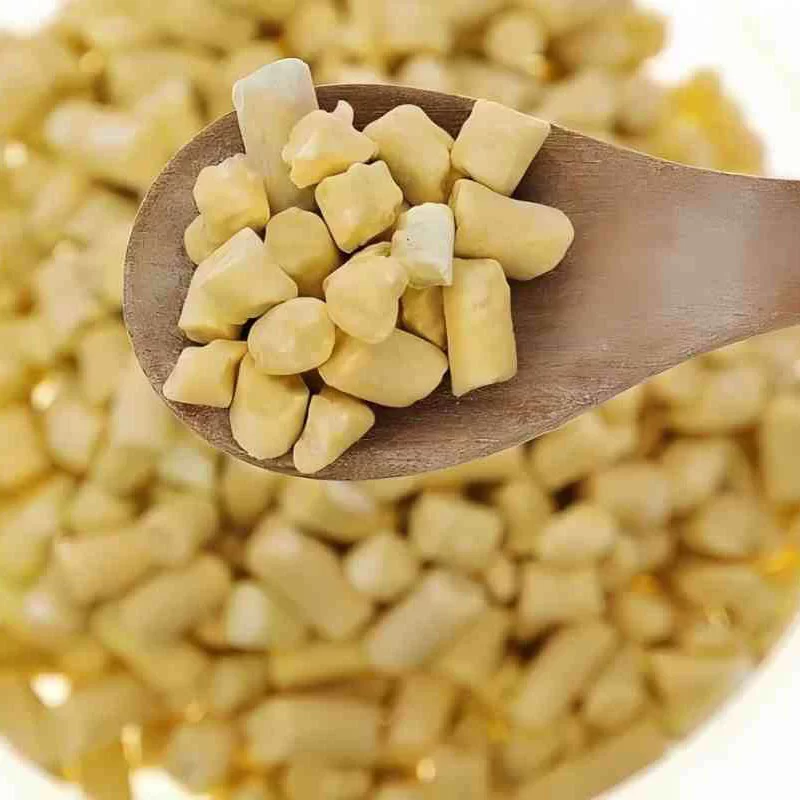
| Solubility | Soluble in water | Appearance | Yellow or grey white |
| Impurity Level | No impurity | Physical State | Powder-like solid |
Offers stronger collecting efficiency than ethyl sodium xanthate, optimizing the recovery of metal sulfide ores.
Readily soluble in water and acetone, ensuring fast dispersion and consistent performance in flotation cells.
Available in both Dry and Compound pellets to meet specific industrial purity and stability requirements.
Dual-purpose utility as a mining collector and a rubber vulcanization accelerator for diverse industrial use.
Specifically designed to precipitate copper, nickel, and other heavy metals from aqueous solutions.
The most widely used collecting agent globally for heavy metal sulfide ore beneficiation processes.




Real-time tracking of pellet grades to ensure consistent supply for mining operations.
Strict monitoring of active components and free alkali levels in every batch.
Comprehensive protocols for handling flammable and toxic chemical materials.
pH-controlled storage management to prevent decomposition of xanthan acid.
Optimized shipping routes for hygroscopic materials to ensure product integrity.
Technical guidance on dosage and pH optimization for maximum flotation yield.
| Metric | Standard Collector | SIPX Premium Grade |
|---|---|---|
| Recovery Rate | Moderate | High Efficiency |
| Collecting Power | Baseline | Stronger / Enhanced |
| Solubility Speed | Standard | Rapid Dispersion |
| Process Stability | Average | Superior (Controlled pH) |
| Yield ROI | Standard | Increased Recovery % |
It is primarily used as a collecting agent in the beneficiation and flotation processes of heavy metal sulfide ores, helping to separate valuable minerals from waste rock.
The decomposition of xanthates is highly dependent on pH. In acidic solutions, xanthan acid is very unstable and decomposes rapidly; lower pH values accelerate this process.
Dry pellets generally have a higher active component (≥90%) and lower moisture, while compound pellets have a slightly lower active component (≥85%) and higher moisture levels.
Yes, it is used as a vulcanization accelerator in the rubber industry and as a precipitating agent for copper and nickel in analytical chemistry and hydrometallurgy.
Pure xanthate has a slight odor, but the presence of impurities can accelerate its decomposition, resulting in a stronger, unpleasant smell.
Since it is flammable, toxic, and hygroscopic, it should be stored in a cool, dry, well-ventilated area away from acidic materials and heat sources.


Looking for premium Liquid Mercury Hg? As leading China suppliers and a certified factory, we provide 99.999 purity mercury for gold extraction, thermometers, and sphygmomanometers with full export compliance.
Product Description
Mercury, chemically known as mercury (Hg), is the only metal that exists in liquid form at normal temperature and pressure. It has a silvery-white metallic luster, is highly fluid and has an extremely high density (13.59 g/cm³). Its unique physical and chemical properties, such as a low melting point (-38.87℃), high boiling point (356.6℃), stable coefficient of thermal expansion, and extremely low vapor pressure, make it a core material for many special products.
Basic Info
Product Name | Mercury |
Content (Hg)% | ≥99.999% |
Iron (Fe)% Iron (FE)% | ≤0.00002 |
Other heavy metals (in lead)% | ≤0.00004 |

Looking for premium Liquid Mercury Hg? As leading China suppliers and a certified factory, we provide 99.999 purity mercury for gold extraction, thermometers, and sphygmomanometers with full export compliance.
Product Description
Mercury, chemically known as mercury (Hg), is the only metal that exists in liquid form at normal temperature and pressure. It has a silvery-white metallic luster, is highly fluid and has an extremely high density (13.59 g/cm³). Its unique physical and chemical properties, such as a low melting point (-38.87℃), high boiling point (356.6℃), stable coefficient of thermal expansion, and extremely low vapor pressure, make it a core material for many special products.
Basic Info
Product Name | Mercury |
Content (Hg)% | ≥99.999% |
Iron (Fe)% Iron (FE)% | ≤0.00002 |
Other heavy metals (in lead)% | ≤0.00004 |