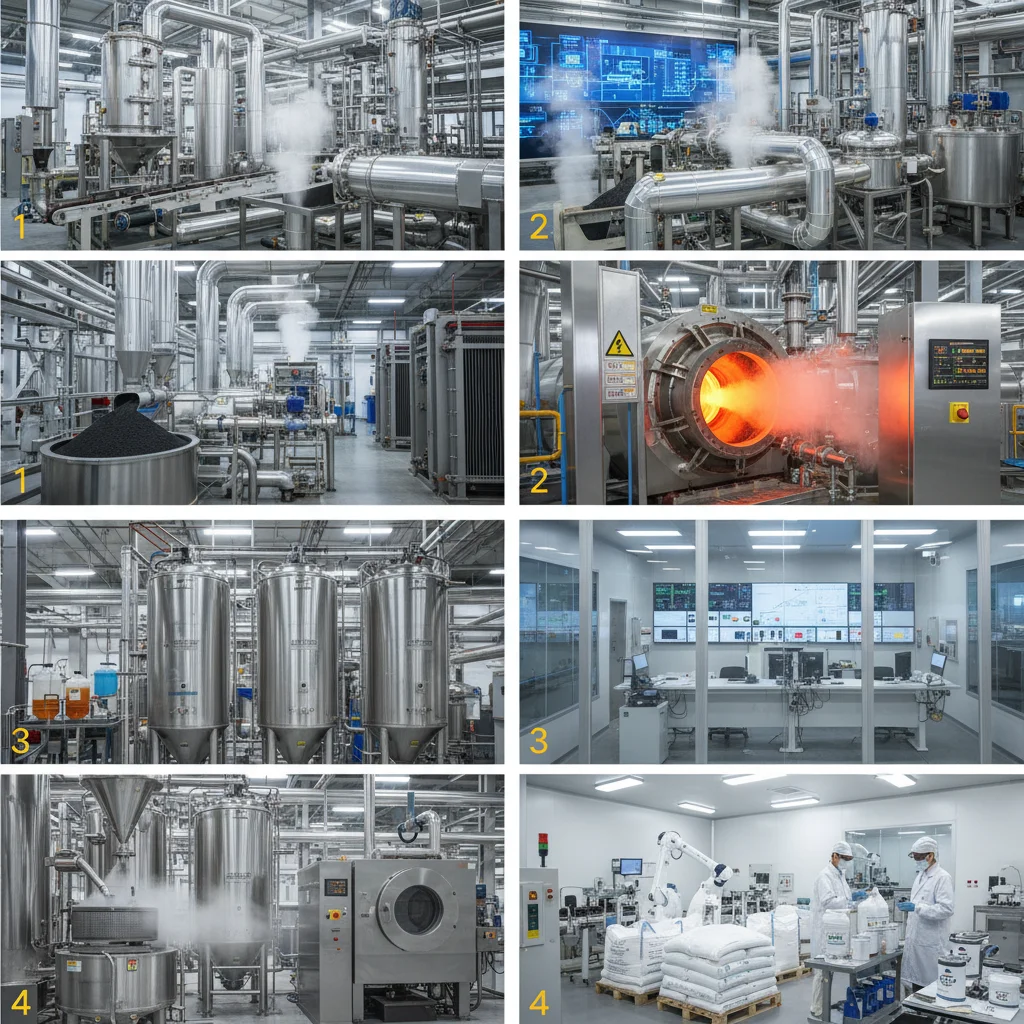
Factors Affecting Granular Activated Carbon Price and Value Guide
Understanding Granular Activated Carbon Price: A Complete Buyer's Guide
Finding the right balance between quality and cost is essential when sourcing filtration media. The granular activated carbon price varies significantly based on the raw material, the activation process, and the specific purity levels required for your application. Whether you are treating industrial wastewater, purifying drinking water, or recovering solvents, understanding the drivers behind the pricing helps in making a cost-effective procurement decision. In this guide, we will explore the factors that influence market costs and how to identify the best value for your investment.

Factors Influencing the Granular Activated Carbon Price
Several variables dictate the final cost of GAC. First and foremost is the raw material; coconut shell-based carbon is typically more expensive than coal-based or wood-based options due to its superior micropore structure. Second, the activation method (steam vs. chemical) impacts the production cost and the resulting Iodine Value. Lastly, logistics and order volume play a huge role. Bulk purchases directly from manufacturers like SDJZ Chem often result in lower per-unit costs compared to smaller, retail quantities. Understanding these variables allows procurement managers to forecast budget requirements more accurately.
Pro Tip: Always check the Iodine Value (IV) when comparing prices. A lower price might mean a lower IV, which leads to faster saturation and more frequent replacements, increasing your total cost of ownership.
Comparing Materials: How Base Material Affects Cost
Different base materials offer different pore distributions, which directly affects the granular activated carbon price. Coconut shell carbon is prized for its hardness and efficiency in removing small molecules. Coal-based carbon is more versatile for a wider range of molecular sizes, while wood-based carbon excels in removing larger organic molecules. Depending on your specific pollutant, choosing the "cheapest" material might actually be the most expensive choice if the adsorption efficiency is low.
How Product Specifications Impact the Granular Activated Carbon Price
When requesting a quote, you will notice that specific technical parameters significantly shift the granular activated carbon price. For instance, a higher Iodine Number indicates a higher surface area and better adsorption capacity, which commands a premium. Similarly, the mesh size (particle size distribution) affects the pressure drop in your filtration columns; specialized mesh sizes require more precise screening, adding to the cost. Below is a typical specification table for high-grade GAC.
Market Trends Affecting GAC Pricing
The global market for activated carbon is sensitive to raw material availability and energy costs. For example, changes in the coconut export policies of Southeast Asian countries can lead to immediate spikes in the granular activated carbon price. Additionally, the rising cost of natural gas used in the activation furnaces often leads to price adjustments. Diversifying your supplier base or entering into long-term contracts can hedge against these volatile market swings, ensuring a steady supply of filtration media without sudden budget shocks.

Application-Specific Cost Analysis
Not all GAC is created equal, and the "correct" price depends on the application. In municipal water treatment, the focus is on bulk capacity and cost per cubic meter, making bituminous coal carbon a popular, cost-effective choice. However, in pharmaceutical or food-grade applications, the requirement for high purity and low ash content means that a higher granular activated carbon price is justified to ensure safety and compliance. Investing in higher-grade carbon for sensitive applications reduces the risk of contamination and regulatory penalties.
Strategies to Optimize Your Filtration Budget
To optimize your spending, focus on the Adsorption Capacity rather than the purchase price. A cheaper carbon that saturates in 3 months is far more expensive than a premium carbon that lasts 6 months. Additionally, consider the possibility of thermal regeneration. Many industrial users find that regenerating their GAC is more sustainable and cheaper in the long run than buying new virgin carbon. By partnering with a technical supplier like SDJZ Chem, you can receive a customized analysis of your wastewater stream to determine the exact grade of carbon needed, eliminating over-spending on unnecessary specifications.
Conclusion: Finding Value in GAC Procurement
Ultimately, the granular activated carbon price should be viewed through the lens of performance and longevity. By analyzing the raw material, iodine value, and your specific application needs, you can move from simply buying a commodity to investing in a high-efficiency filtration system. Whether you need the precision of coconut shell carbon or the versatility of coal-based GAC, choosing a professional manufacturer ensures that you get the best possible ROI for your environmental protection efforts.
Frequently Asked Questions (FAQs)
Why does the price of coconut shell GAC differ from coal-based GAC?
The price difference stems primarily from the raw material's availability and the resulting physical structure. Coconut shells are a renewable resource but are geographically limited, and the resulting carbon has a much higher concentration of micropores. This makes it exceptionally efficient at removing small organic molecules and odors, which allows manufacturers to price it as a premium product. Coal-based carbon is produced in larger volumes and possesses a wider range of pore sizes (mesopores and macropores), making it more affordable and suitable for a broader range of industrial chemicals.
How does the Iodine Value affect the cost?
The Iodine Value is a standard measure of the adsorption capacity of activated carbon. A higher Iodine Value indicates a larger internal surface area and more active sites for pollutants to bind to. Achieving a higher IV requires more precise control over the activation temperature and time, which increases energy consumption and production costs. Therefore, carbon with a very high Iodine Value generally commands a higher price. However, it often lasts longer in the filter, potentially reducing the frequency of replacements and lowering overall operational costs.
Does the order quantity significantly impact the granular activated carbon price?
Yes, order quantity is one of the most significant factors in pricing. Purchasing in bulk (e.g., full container loads or multi-ton orders) allows the manufacturer to optimize production runs and reduce packaging and shipping overheads per unit. For large-scale industrial plants, sourcing directly from the factory usually results in a substantial discount compared to buying from distributors. We recommend auditing your annual carbon consumption and placing larger, less frequent orders to take advantage of these economies of scale.
What are the hidden costs associated with cheap activated carbon?
Low-cost activated carbon often comes with hidden risks that can outweigh the initial savings. First is the issue of "attrition"—cheap carbon may have low hardness, causing it to break down into fines that clog your system or leak into the effluent. Second is the saturation rate; lower-quality carbon requires more frequent change-outs, increasing labor costs and disposal fees. Finally, poor quality control can lead to inconsistent performance, potentially resulting in failure to meet environmental discharge standards and leading to costly regulatory fines.