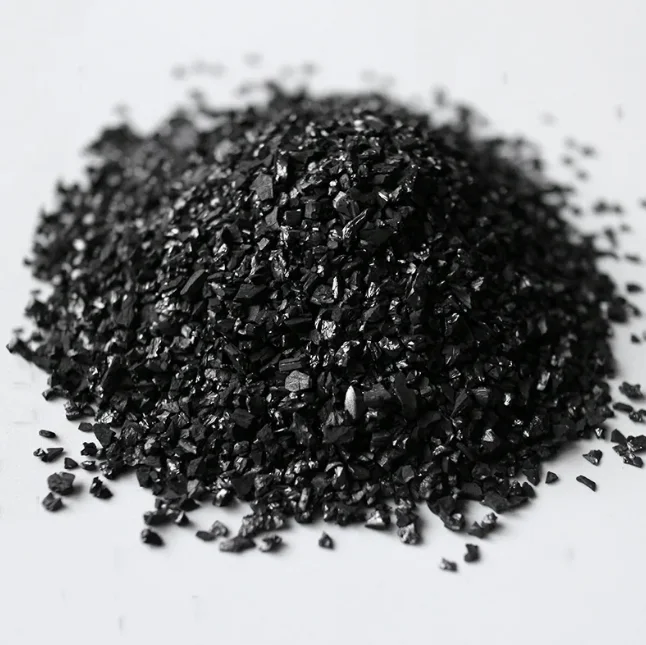
Selecting the right activated carbon manufacturers is a critical decision for industries relying on high-efficiency adsorption for purification and filtration. Whether the objective is water treatment, air purification, or chemical recovery, the quality of the carbon—determined by pore structure and surface area—directly impacts operational throughput and environmental compliance.
Procurement officers and engineers often struggle to differentiate between suppliers based on generic data sheets, leading to issues like premature saturation or insufficient contaminant removal. The challenge lies in matching the specific raw material (coal, coconut shell, or wood) and activation method with the molecular size of the target pollutants.
This guide provides a professional framework for evaluating activated carbon manufacturers, focusing on technical specifications, material suitability, and quality control standards to ensure long-term system stability and cost-efficiency.

Material Origins and Pore Structure

The efficacy of activated carbon is rooted in its precursor material, which determines the distribution of micropores, mesopores, and macropores. Reputable activated carbon manufacturers typically offer three primary bases: coconut shells, which provide high microporosity ideal for small molecule adsorption; coal, which offers a balanced pore range for versatile industrial use; and wood, which is characterized by larger mesopores suitable for organic macromolecules.
Understanding this relationship is essential because using a microporous carbon for a large-molecule contaminant results in "pore plugging," where the surface is blocked, leaving the internal capacity unused. Professional selection requires aligning the carbon's pore size distribution with the kinetic diameter of the target impurity.
Critical Performance Metrics for Evaluation
When auditing activated carbon manufacturers, technical data sheets should be analyzed beyond simple "grade" labels. The Iodine Number is the most common proxy for micropore volume and overall adsorption capacity, while the CTC (Carbon Tetrachloride) value measures the carbon's ability to adsorb larger molecules. High-quality industrial carbon must demonstrate consistency across these metrics to prevent unpredictable breakthrough times in filtration columns.
Furthermore, the Ash Content and Hardness (attrition resistance) are vital for operational longevity. High ash content can indicate impurities that block active sites or leach into the treated stream, while low hardness leads to carbon fines that can clog downstream equipment or cause pressure drops across the bed.
Matching Carbon Grades to Industrial Applications
Application-specific selection is where operational ROI is realized. In water treatment chemicals and mineral processing, where high volumes of aqueous solutions are processed, granular activated carbon (GAC) is preferred for its lower pressure drop. Conversely, powdered activated carbon (PAC) is utilized for batch treatment or rapid dose-response scenarios due to its higher available surface area and faster kinetics.
For specialized sectors like gold mining chemicals or detergent chemical production, the carbon must be tailored for specific solvent environments. In these cases, chemical activation (using phosphoric acid or zinc chloride) is often employed by manufacturers to create a more open pore structure that facilitates the adsorption of complex organic compounds.
Relative Efficiency of Activation Methods
The activation process—either thermal or chemical—defines the final surface chemistry of the carbon. Thermal activation is the standard for high-purity applications, using steam or CO2 at extreme temperatures to clear pores. Chemical activation allows for lower processing temperatures and often results in a higher surface area but may require more rigorous washing to remove residual activating agents.
The provided conceptual framework illustrates the relative adsorption efficiency across different carbon types. Coconut-based carbon excels in small molecule removal, while wood-based carbon is more effective for high-molecular-weight organics. Coal-based options provide a normalized middle ground for general purpose industrial filtration.
Supplier Quality Assurance and Certification
Reliability in the supply chain is guaranteed through standardized testing and certification. Leading activated carbon manufacturers implement ISO-certified quality management systems to ensure batch-to-batch consistency. For food-grade or pharmaceutical applications, certifications like HACCP or FDA compliance are mandatory to ensure the carbon does not introduce contaminants into the product stream.
A trustworthy manufacturer will provide a comprehensive Certificate of Analysis (CoA) for every shipment, detailing the Iodine Number, moisture content, and pH level. The ability to provide traceable raw material sources is also a marker of a sophisticated producer, as the origin of the coconut shell or coal significantly affects the carbon's stability.
Common Risks in Low-Cost Procurement
Opting for the lowest price per ton often leads to higher Total Cost of Ownership (TCO). Low-cost carbons frequently suffer from poor activation, resulting in lower active surface areas. This leads to faster saturation, requiring more frequent carbon replacement and increasing the downtime of the filtration system.
Another significant risk is the presence of "fines"—small particles created by low hardness. These fines can migrate through the filter bed, contaminating the effluent and potentially damaging downstream pumps or membranes. When evaluating a quote, buyers should calculate the cost per unit of contaminant removed rather than the cost per kilogram of material.
Manufacturer Selection Decision Matrix
To streamline the selection process, procurement teams should use a weighted matrix that balances technical capability with logistics and certification. The following table compares common carbon types provided by activated carbon manufacturers to help align product choice with operational needs.
| Carbon Base | Primary Pore Size | Best Application | Main Limitation |
|---|---|---|---|
| Coconut Shell | Micropores | Water/Air Purification | Poor for large molecules |
| Bituminous Coal | Broad Range | Industrial Wastewater | Higher ash content |
| Wood-based | Mesopores | Decolorization | Lower mechanical strength |
| Peat-based | Macropores | Heavy Organic Load | Limited microporosity |
| Chemically Act. | Customizable | Specialty Chemical Rec. | Residual acid risk |
| Steam Act. | Standardized | General Filtration | Higher energy cost |
Ultimately, the decision should be driven by the molecular weight of the target pollutant and the required flow rate of the system. A technical consultation with the manufacturer is recommended to verify the carbon's adsorption isotherm for the specific application.
Frequently Asked Questions
This depends on the molecular size of the target contaminant. Small molecules like chlorine or volatile organic compounds (VOCs) require microporous carbon (e.g., coconut shell). Larger molecules, such as dyes or complex proteins, require mesoporous carbon (e.g., wood-based) to avoid surface plugging.
The Iodine Number is a standardized measure of the total micropore volume. A higher number generally indicates a higher capacity for adsorbing small molecules, which is a primary benchmark used by manufacturers to grade their carbon.
Yes, many industrial-grade carbons can be thermally regenerated in a kiln to burn off adsorbed organics. However, each cycle slightly reduces the total pore volume and mechanical hardness, eventually requiring full replacement.
Common causes include "channeling," where water finds a path of least resistance through the bed, or the use of carbon with an inappropriate pore size for the contaminant, leading to rapid surface saturation.
High ash content means non-carbon materials are occupying space in the granule. This not only reduces the available adsorption sites but can also lead to the leaching of minerals into the treated water, potentially altering its pH or conductivity.
Carbon should be stored in a cool, dry, and well-ventilated area. Because it is highly adsorbent, it must be kept in sealed containers away from volatile organic compounds (VOCs) or strong odors, which it will naturally absorb from the air.
Conclusion
Successful adsorption outcomes depend on the precise alignment of the carbon's physical structure with the chemical properties of the contaminant. By prioritizing pore size distribution, hardness, and verified quality certifications over initial unit price, organizations can significantly reduce operational downtime and ensure consistent purification standards.
For technical specifications and application-specific guidance on industrial chemicals and filtration materials, professionals can review the available product range at www.sdjz-chem.com to find the appropriate solution for their operational requirements.