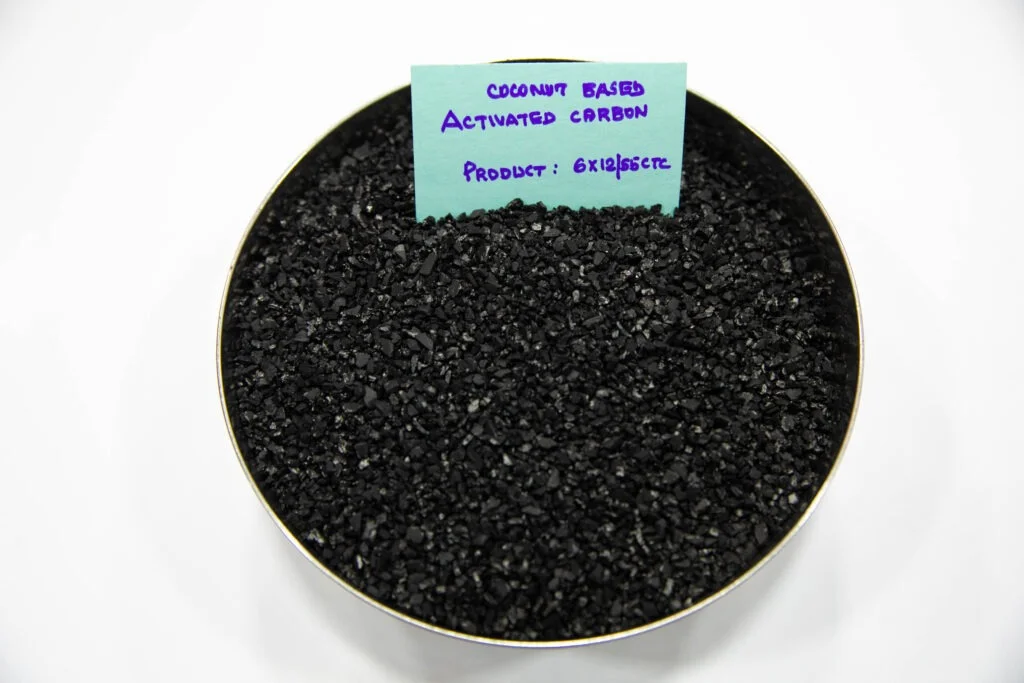
Activated carbon, a versatile adsorbent material, plays a critical role in numerous industries and environmental applications globally. Its exceptional ability to remove impurities, contaminants, and pollutants from liquids and gases makes it indispensable in water purification, air filtration, food and beverage processing, and pharmaceutical manufacturing. Understanding the diverse types of activated carbon is crucial for optimizing performance and tailoring solutions to specific needs.
The global demand for activated carbon is steadily increasing, driven by stricter environmental regulations, growing industrialization, and rising concerns about water and air quality. The market is currently valued at billions of dollars, with significant growth projected in the coming years, particularly in emerging economies. This growing demand highlights the importance of innovation in production methods and the development of specialized activated carbon formulations.
Furthermore, advancements in material science are leading to the creation of new types of activated carbon with enhanced properties, such as increased surface area, improved pore size distribution, and customized surface chemistry. These advancements are expanding the range of applications and opening up new opportunities for this essential material.
The Significance of Understanding Activated Carbon Types
The efficacy of activated carbon is heavily dependent on its specific type and properties. Different source materials and activation processes yield activated carbons with varying pore structures, surface areas, and surface chemistries, ultimately determining their suitability for different applications. Choosing the correct types of activated carbon is paramount for achieving optimal results.
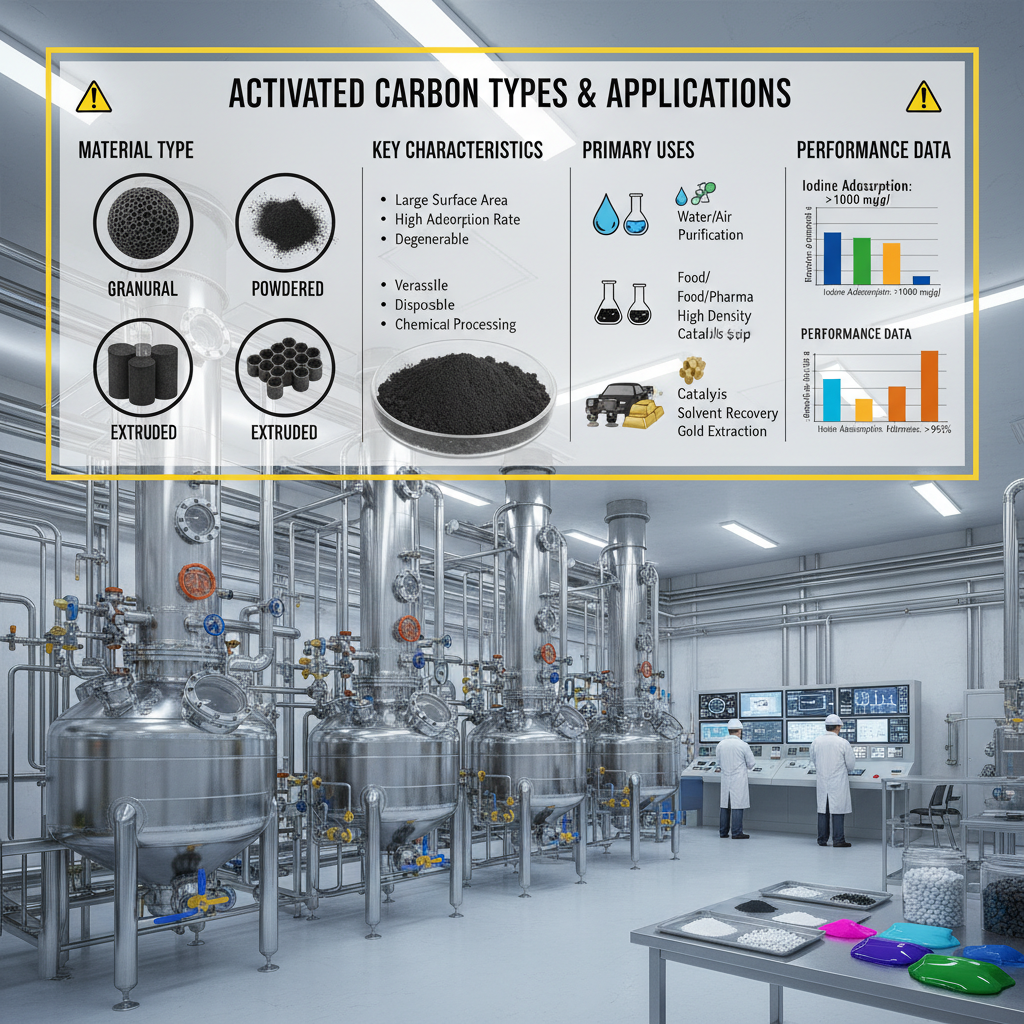
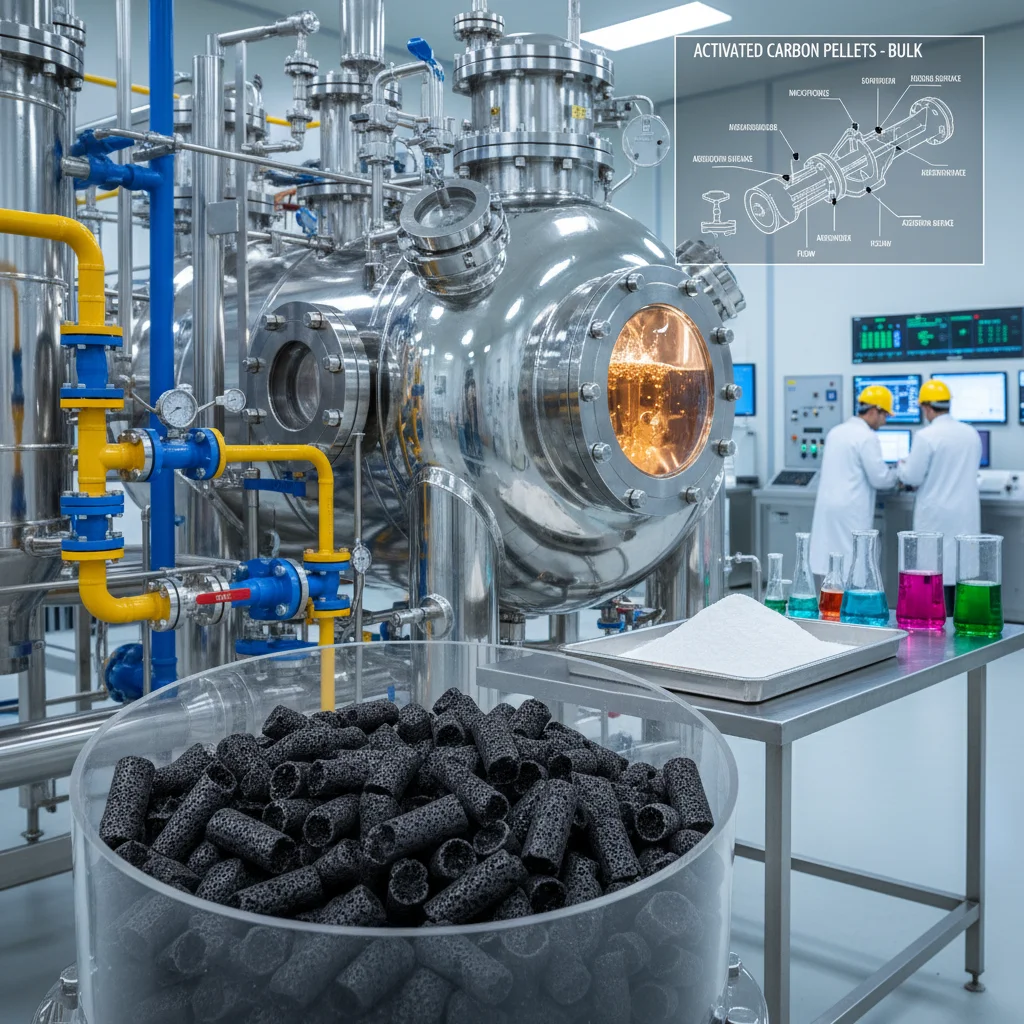
Understanding these nuances allows for targeted solutions, maximizing adsorption efficiency and minimizing costs. For instance, powdered activated carbon (PAC) is often used for rapid adsorption in water treatment, while granular activated carbon (GAC) is ideal for fixed-bed filtration systems.
Defining Types of Activated Carbon
Activated carbon is a carbonaceous material produced through a process of carbonization and activation, resulting in a highly porous structure with an immense surface area. This large surface area is the key to its adsorptive properties. The types of activated carbon differ primarily in their source material and activation method. Common source materials include coal, wood, coconut shells, and peat.
Activation can be achieved through physical processes, such as steam or carbon dioxide activation, or chemical processes, using activating agents like phosphoric acid or zinc chloride. These processes create a network of pores, ranging in size from micropores to macropores, which determine the material’s ability to adsorb molecules of different sizes.
The resulting material, possessing millions of pores per gram, effectively traps and holds impurities through a combination of physical adsorption (Van der Waals forces) and chemical adsorption (chemisorption). This makes activated carbon a highly effective filter and purification agent with applications extending beyond just environmental remediation.
Core Characteristics of Activated Carbon Varieties
Several key characteristics differentiate the various types of activated carbon. Surface area, typically measured in square meters per gram (m²/g), is a primary indicator of adsorption capacity. Pore size distribution – the relative abundance of micropores, mesopores, and macropores – determines which types of molecules can be effectively adsorbed.
Surface chemistry, influenced by the activation method and any surface modifications, plays a role in the selectivity of adsorption. For example, oxidized activated carbons exhibit enhanced adsorption of polar compounds. Hardness and attrition resistance are also crucial, especially for applications involving frequent handling or fluidization.
Finally, particle size impacts flow rate and pressure drop in filtration systems. Powdered activated carbon (PAC) offers rapid adsorption but requires subsequent separation, while granular activated carbon (GAC) provides ease of handling and regeneration but may have a slower adsorption rate.
Practical Applications Across Industries
The diverse types of activated carbon find applications across a broad spectrum of industries. In water treatment, activated carbon removes chlorine, sediment, volatile organic compounds (VOCs), taste, and odor. Air purification utilizes activated carbon to eliminate pollutants, odors, and hazardous gases.
Adsorption Capacity Comparison of Activated Carbon Types
Advantages & Long-Term Value Proposition
Utilizing appropriate types of activated carbon offers significant long-term benefits. Cost-effectiveness is a key advantage, especially considering the potential for regeneration and reuse. Reduced reliance on expensive alternative purification technologies contributes to lower operational costs.
Sustainability is another crucial aspect. Activated carbon made from renewable sources, such as coconut shells or wood, reduces the environmental footprint. Furthermore, its ability to remove pollutants contributes to a healthier environment and improved public health.
Future Trends & Innovations in Activated Carbon
Research and development efforts are focused on enhancing the performance and sustainability of activated carbon. Nanotechnology is being employed to create activated carbons with tailored pore structures and enhanced surface reactivity. The development of bio-activated carbons, derived from agricultural waste, offers a promising path towards a circular economy.
Furthermore, advancements in activation techniques, such as microwave-assisted activation, are reducing energy consumption and improving product quality. Integration with digital monitoring and control systems is optimizing adsorption processes and enabling predictive maintenance.
The focus on creating specialized types of activated carbon tailored for specific applications, like carbon capture and storage or the removal of emerging contaminants, will drive innovation in the years to come.
Challenges and Potential Solutions
Despite its numerous benefits, the use of activated carbon faces certain challenges. The cost of raw materials and activation processes can be significant. Regeneration of spent activated carbon can be energy-intensive and may generate secondary waste streams.
However, innovative solutions are emerging. Exploring alternative, lower-cost source materials and optimizing activation processes can reduce production costs. Developing more efficient and environmentally friendly regeneration methods, such as thermal or chemical regeneration with closed-loop systems, can minimize environmental impact.
Furthermore, the development of hybrid materials, combining activated carbon with other adsorbents or catalysts, can enhance performance and address specific adsorption challenges.
Summary of Activated Carbon Types & Their Suitability
| Activated Carbon Type |
Primary Source Material |
Typical Pore Size |
Suitable Applications |
| Granular Activated Carbon (GAC) |
Coal, Coconut Shell |
Mixed (Macro, Meso, Micro) |
Water Treatment, Air Purification, Industrial Gas Cleaning |
| Powdered Activated Carbon (PAC) |
Coal, Wood |
Primarily Micro |
Drinking Water Treatment, Wastewater Treatment, Food Processing |
| Extruded Activated Carbon |
Coal |
Macroporous |
Gas Phase Adsorption, VOC Removal |
| Beaded Activated Carbon |
Polymer Resins |
Tunable |
Selective Adsorption, Pharmaceutical Purification |
| Impregnated Activated Carbon |
GAC or PAC + Chemical Impregnants |
Variable |
Gas Phase Removal of Specific Pollutants (e.g., Mercury, Hydrogen Sulfide) |
| Fiber Activated Carbon |
Rayon, Polyacrylonitrile |
Microporous |
Air Filtration, Medical Applications |
FAQS
Granular activated carbon (GAC) is larger in particle size, making it suitable for fixed-bed filters with lower pressure drop and ease of regeneration. Powdered activated carbon (PAC) has a smaller particle size, offering faster adsorption kinetics but requiring subsequent separation processes. GAC is often used for continuous processes, while PAC is better for batch treatments. The choice depends on application needs.
Activated carbon can be regenerated through thermal regeneration (heating to high temperatures to desorb adsorbed contaminants) or chemical regeneration (using solvents or chemicals to remove adsorbed materials). Thermal regeneration is more common for large-scale applications, while chemical regeneration is suitable for specific contaminants. Proper regeneration maintains adsorption capacity and reduces waste.
Activated carbon itself is generally considered environmentally friendly due to its ability to remove pollutants. However, the production process can have environmental impacts. Using renewable source materials (like coconut shells) and implementing sustainable activation methods are crucial. Responsible regeneration and disposal are also important for minimizing its environmental footprint.
The cost of activated carbon is influenced by several factors, including the source material, activation process, particle size, and grade. Coconut shell-based activated carbon is typically more expensive than coal-based. Demand, transportation costs, and market conditions also play a role. The need for specialized modifications adds to the overall cost.
While activated carbon is highly effective at removing a wide range of contaminants, it’s not a universal solution. It excels at removing organic compounds, chlorine, and VOCs, but may be less effective for certain inorganic contaminants like heavy metals without specific modifications. Selection of the right types of activated carbon is critical based on the contaminants present.
Activated carbon dust can be an irritant to the respiratory system and eyes. It’s recommended to wear appropriate personal protective equipment (PPE) such as dust masks and safety glasses during handling. Spent activated carbon may contain adsorbed hazardous materials, requiring careful disposal procedures. Always consult the material safety data sheet (MSDS).
Conclusion
In conclusion, understanding the diverse types of activated carbon – from their source materials and activation methods to their specific properties and applications – is essential for optimizing performance and addressing a wide range of environmental and industrial challenges. The ability to tailor activated carbon solutions to specific needs provides significant cost savings, enhances sustainability, and contributes to a healthier planet.
Looking ahead, continued innovation in material science and activation technologies will further expand the potential of activated carbon, leading to more efficient and environmentally friendly solutions for water purification, air filtration, and numerous other critical applications. Visit our website at www.sdjz-chem.com to learn more about our comprehensive range of activated carbon products and solutions.