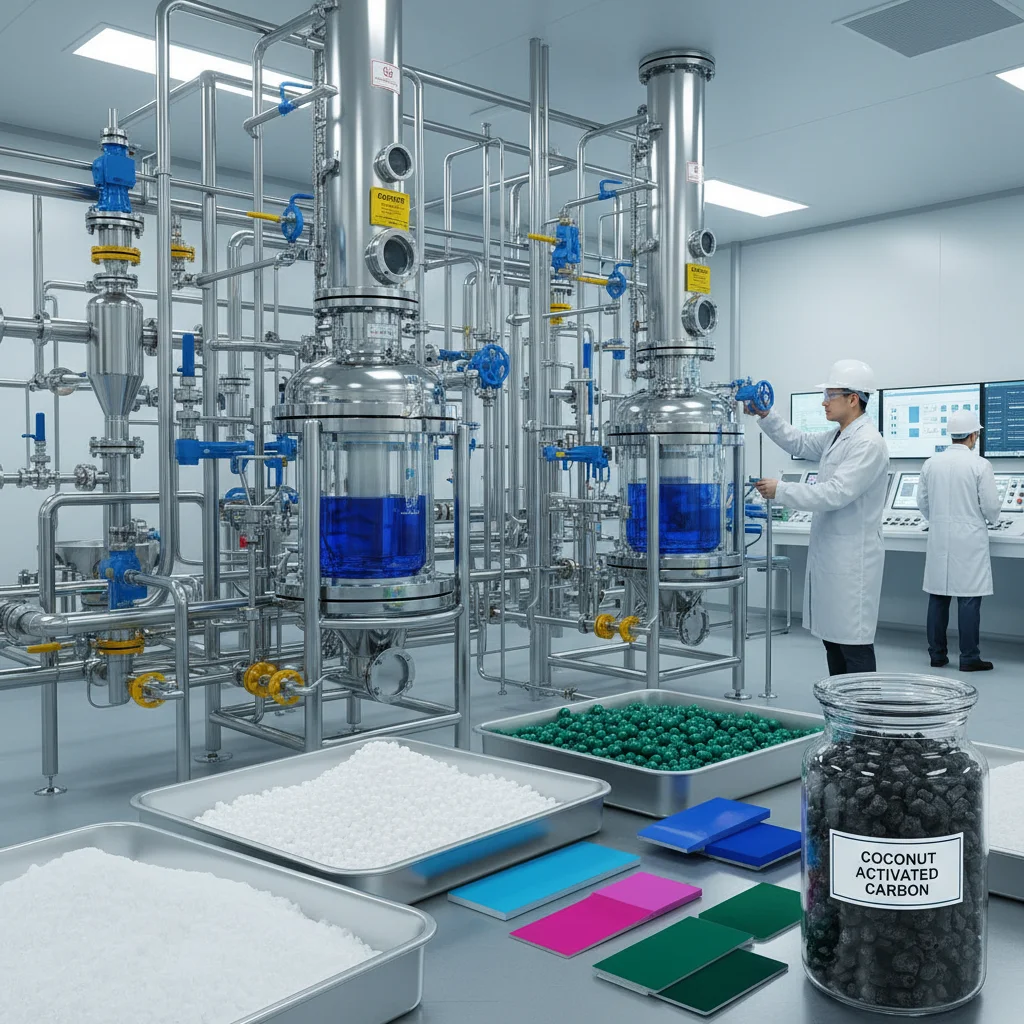
The global demand for precious metals has driven the evolution of sophisticated recovery techniques, where the efficiency of the adsorption process defines the profitability of a mining operation. In the contemporary metallurgical landscape, the use of specialized porous materials has become the industry standard for capturing gold from cyanide leach solutions. Understanding the mechanics of these materials is essential for operators seeking to maximize yield and minimize environmental impact.
Across various geological terrains, from the vast deposits in Australia to the remote mines of Africa, the challenge remains the same: how to selectively recover gold from complex ore matrices containing high concentrations of impurities. Traditional methods often struggle with low-grade ores, necessitating a shift toward high-surface-area adsorbents that can operate effectively under varying pH and temperature conditions.
Modern industrial chemistry has provided a solution through the optimization of activated carbon for gold extraction, which utilizes a vast network of micropores to trap gold-cyanide complexes. By refining the pore size distribution and surface chemistry, mining companies can significantly increase their recovery rates and operational efficiency.

Global Relevance of Activated Carbon for Gold Extraction
The global mining sector relies heavily on the efficiency of carbon-in-pulp (CIP) and carbon-in-leach (CIL) processes. These methods are indispensable for the economic viability of gold mining, particularly as the industry moves toward processing lower-grade deposits. The ability to selectively adsorb gold from a slurry is the cornerstone of modern gold production.
Statistically, the optimization of the adsorbent medium can lead to a recovery increase of 2-5%, which translates to millions of dollars in additional revenue for large-scale operations. Consequently, the global search for the most durable and active carbon has intensified, leading to innovations in coconut-shell and coal-based substrates.
Defining the Role of Adsorbents in Gold Mining
In simple terms, activated carbon for gold extraction acts as a molecular sponge. It is a highly porous form of carbon that has been "activated" through chemical or thermal processes to open up billions of tiny pores, vastly increasing its internal surface area. This surface area is where the gold-cyanide complex is adsorbed.
This process is critical because it allows for the concentration of gold from a dilute solution into a small volume of carbon. Without this mechanism, recovering gold from tonnes of processed ore would require an impractical amount of chemical reagents and energy, making the process economically unfeasible.
Beyond just efficiency, these adsorbents are essential for environmental protection. By capturing the gold effectively, they reduce the amount of residue and toxic cyanide that remains in the tailings, aligning mining operations with international safety and ISO environmental standards.
Core Components of High-Efficiency Carbon
The effectiveness of activated carbon for gold extraction depends primarily on its pore structure. The distribution of micropores (less than 2nm) is where the majority of gold adsorption occurs, while mesopores act as transportation channels, allowing the gold complexes to reach the inner active sites.
Hardness and attrition resistance are equally vital components. In a mining circuit, carbon beads are subjected to constant agitation and collision. If the carbon is too soft, it breaks down into "fines," which are lost in the tailings, leading to significant gold loss and increased costs for replacing the adsorbent.
Furthermore, the surface chemistry must be carefully controlled to ensure high selectivity. The ideal activated carbon for gold extraction must resist the adsorption of competing ions or organic matter, ensuring that the limited capacity of the carbon is dedicated primarily to the gold-cyanide complex.
Performance Metrics and Scalability
Evaluating the performance of gold extraction carbon involves analyzing its adsorption kinetics and the total loading capacity. High-performing carbons can load several kilograms of gold per tonne of carbon, which minimizes the frequency of the elution cycle and reduces overall operational downtime.
Scalability is achieved by ensuring consistent quality across large batches. Whether a mine is operating a small pilot plant or a massive industrial circuit, the carbon must exhibit uniform activity levels to prevent "channeling" and ensure a consistent gold recovery rate across all stages of the circuit.
Performance Comparison of Gold Recovery Adsorbents
Global Applications in Diverse Geologies
In the rugged terrains of the Canadian Shield, mining operations face extreme temperature fluctuations. Here, the choice of carbon must account for the slower kinetics of gold adsorption in cold climates, requiring carbons with highly accessible pore structures to maintain productivity.
Conversely, in the tropical regions of South America and Southeast Asia, high humidity and the presence of organic clays often contaminate the leach solution. In these contexts, activated carbon for gold extraction is frequently paired with advanced pre-treatment stages to prevent "carbon fouling" and maintain the active sites.
Long-Term Value and Sustainability
The long-term value of high-quality carbon is found in its regenerability. Since carbon can be stripped of gold and then thermally reactivated, a single batch of carbon can be reused multiple times. This circularity reduces the total material footprint and significantly lowers the operational cost per ounce of gold produced.
From a sustainability perspective, moving toward renewable precursors, such as coconut shells, reduces the reliance on fossil-fuel-based carbons. This shift not only lowers the carbon footprint of the mining operation but also ensures a more stable and ethical supply chain for global mining companies.
Reliability in carbon performance also translates to safety. By ensuring complete gold capture, mines can reduce the risk of precious metal losses in tailings dams, which prevents potential environmental leakage and ensures that the maximum possible value is extracted from the ore safely and ethically.
Future Innovations in Gold Recovery Materials
The future of gold recovery is moving toward "smart" adsorbents. Researchers are developing carbon materials with surface-functionalized groups that can distinguish between gold and other metals like copper or silver with near-perfect precision, further reducing the cost of downstream refining.
Automation and digitalization are also playing a role. Integrated sensors in CIL tanks can now monitor the loading state of the carbon in real-time, allowing operators to optimize the carbon movement and stripping cycles based on actual saturation levels rather than fixed schedules.
Finally, the integration of green energy into the thermal reactivation process is a key trend. By using solar-thermal or electric kilns instead of gas-fired ones, the industry is aiming to make the life cycle of activated carbon for gold extraction truly carbon-neutral, aligning profitability with planetary health.
Technical Comparison of Gold Recovery Adsorbent Types
| Carbon Material Source | Attrition Resistance (1-10) | Gold Loading Capacity | Regeneration Efficiency |
|---|
| Coconut Shell | 9.5 | Very High | Excellent |
| Bituminous Coal | 7.0 | High | Good |
| Lignite Coal | 5.0 | Moderate | Fair |
| Wood-Based | 4.0 | Low-Moderate | Fair |
| Synthetic Polymer | 8.0 | High | Moderate |
| Bamboo-Based | 6.0 | Moderate | Good |
FAQS
Coconut shell carbon typically possesses a higher concentration of micropores and superior hardness. This makes it more effective at capturing gold-cyanide complexes and more resistant to physical breakdown (attrition) during the agitation process in CIP/CIL tanks, reducing gold loss through carbon fines.
The pH must be maintained in the alkaline range (typically 10-11) to prevent the formation of toxic HCN gas and to ensure the stability of the gold-cyanide complex. If the pH drops too low, the efficiency of the activated carbon decreases, and the chemical stability of the entire leach circuit is compromised.
Carbon fouling occurs when organic matter or other minerals block the micropores of the carbon, preventing gold from adsorbing. This can be prevented by using high-quality activated carbon with specific pore distributions and implementing pre-treatment stages to remove organic contaminants before the carbon contact phase.
No, but it can be reused many times. Through a process called thermal reactivation, the carbon is heated in a kiln to burn off organic contaminants and restore its pore structure. Over time, the carbon physically degrades, and a percentage of "fresh" carbon must be added to the circuit to maintain efficiency.
The mesh size is a balance between surface area and recovery. Smaller beads provide more surface area for faster kinetics but are harder to recover from the slurry. Most industrial operations use a standardized range (e.g., 12x40 mesh) to optimize the balance between adsorption speed and screen recovery efficiency.
Activated carbon adsorbs both gold and silver complexes, though the affinity for gold is generally higher. The ratio of gold to silver recovered depends on the relative concentrations in the solution and the specific surface properties of the carbon used.
Conclusion
The implementation of high-performance activated carbon for gold extraction is more than a technical choice; it is a strategic economic decision. By optimizing pore structure, ensuring high attrition resistance, and implementing sustainable regeneration cycles, mining operations can maximize their gold recovery while minimizing their environmental footprint. The synergy between material science and metallurgical engineering remains the primary driver for efficiency in the precious metals industry.
As the industry moves toward lower-grade ores and stricter environmental regulations, the demand for smarter, more selective adsorbents will only grow. Companies that invest in superior carbon technology today will be better positioned to navigate the challenges of tomorrow's mining landscape, ensuring long-term profitability and sustainability. For more information on high-efficiency adsorbents and chemical solutions, visit our website: www.sdjz-chem.com