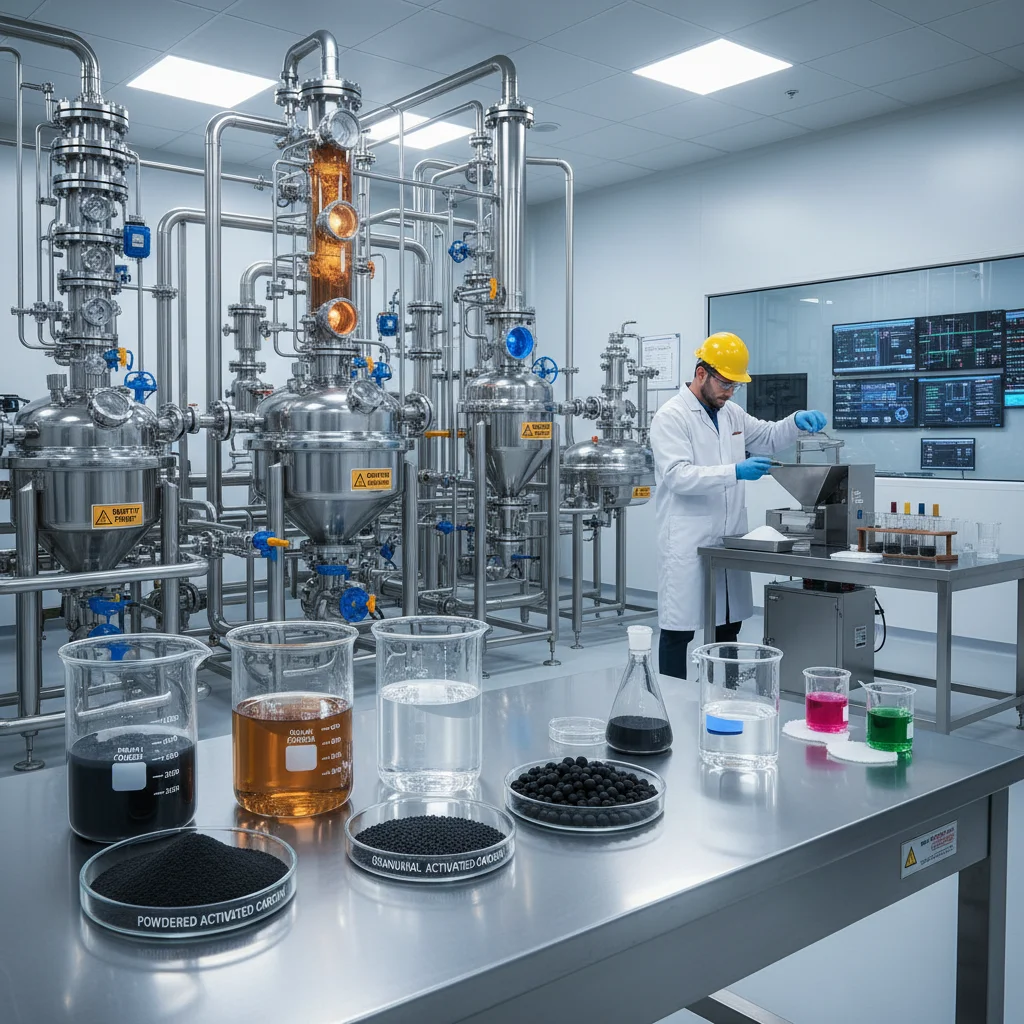
Understanding the fluctuations in the granular activated carbon price is essential for industries ranging from water treatment to chemical manufacturing, as it directly impacts the operational overhead of purification processes. While many search for carbon pricing, high-precision industrial needs often require a shift toward ultra-pure reagents like liquid mercury, which serves a completely different but equally critical role in inorganic salt production.
Globally, the demand for high-purity chemical reagents remains steady, though the market for standard filtration media often fluctuates based on raw material availability. When professionals analyze the granular activated carbon price, they are typically looking for cost-effective ways to manage impurities, much like how industrial chemists seek the highest purity mercury to ensure stable thermal expansion and density in high-precision instruments.
This guide explores the intersection of industrial reagent procurement and cost management. By comparing the stability of ultra-high purity mercury (≥99.999%) against general commodity chemicals, we can better understand how to optimize supply chains and secure the most competitive granular activated carbon price or high-purity reagent rates for long-term industrial success.

Global Market Dynamics of Industrial Reagents
The global landscape for industrial reagents is characterized by a strict divide between bulk commodity chemicals and ultra-high purity reagents. While the granular activated carbon price reflects the trends of general filtration markets, the market for Industrial-Grade Liquid Mercury (Hg) is driven by the need for extreme precision and stability in specialized industrial applications.
Securing a stable supply chain for reagents with a purity of ≥99.999% is critical for maintaining production yields. Companies that prioritize certified compliance and direct manufacturer sourcing avoid the volatility typically seen in lower-grade markets, ensuring that their high-precision instruments remain functional without interruption.
Defining High-Purity Standards in Chemical Sourcing
In the realm of inorganic salts and chemical manufacturing, "purity" is not merely a descriptive term but a quantifiable metric that determines the success of a chemical reaction. For liquid mercury, this means maintaining a purity level of ≥99.999%, which minimizes contaminants such as Iron (Fe ≤0.00002%) and Lead (Pb ≤0.00004%), ensuring that the resulting chemical output is free from unwanted side reactions.
When procurement officers compare a standard granular activated carbon price to the cost of high-purity mercury, they must shift their focus from "price per ton" to "value per application." The ultra-low vapor pressure and precise boiling point (356.6℃) of premium mercury provide a level of operational stability that lower-grade materials simply cannot offer.
This commitment to purity is what separates a basic industrial commodity from a premium industrial asset. By adhering to rigorous multi-stage testing and compliance monitoring, manufacturers can provide materials that meet the strictest international standards, reducing regulatory risk and enhancing long-term process efficiency.
Core Parameters of Ultra-Pure Liquid Mercury
The physical properties of our Industrial-Grade Liquid Mercury are engineered for extreme performance. With a density of 13.59 g/cm³ and a silvery-white metallic appearance, this material is the only metal that remains liquid at standard temperature and pressure, making it indispensable for specific density-dependent industrial processes.
While some users may be searching for a granular activated carbon price for general purification, the specialized needs of the inorganic salts sector require the exact boiling point of 356.6℃ and a melting point of -38.87℃, ensuring stability across a wide range of thermal conditions.
Beyond the physical constants, the chemical purity is the defining feature. By keeping other heavy metals like Lead below 0.00004%, our reagent ensures that sensitive chemical reactions are not compromised, providing a level of reliability that protects the customer's investment in their production line.
Cost Efficiency and Investment Return Comparison
Evaluating the return on investment (ROI) for high-purity reagents requires looking beyond the initial purchase price. Much like how a premium granular activated carbon price might be higher but result in fewer filter changes, ultra-pure mercury reduces the risk of contamination-led batch failures in chemical manufacturing.
By utilizing a reagent with ≥99.999% purity, manufacturers achieve optimized high yields and negligible impurity risks compared to standard grades (99.9% - 99.99%), which often carry moderate risks of Iron and Lead contamination.
Comparison of Industrial Reagent Value Metrics
Global Applications in Inorganic Salt Manufacturing
In the manufacturing of inorganic salts, our high-purity mercury serves as a core component for high-precision instruments and catalytic processes. Its exceptional metallic luster and fluidity allow for precise measurement and stable reactions, ensuring that the final chemical product meets the most stringent quality standards.
While an organization might monitor the granular activated carbon price for their water treatment systems, they rely on the absolute purity of liquid mercury for the actual synthesis of chemical reagents. This dual-track procurement strategy ensures that both the environment and the product are managed with professional rigor.
Logistics and Compliance for Hazardous Materials
The international trade of liquid mercury is strictly regulated due to its status as a hazardous material. Unlike purchasing carbon media where the granular activated carbon price is the primary concern, mercury procurement requires a focus on "Certified Compliance." As a legitimate export enterprise approved by national authoritative departments, we ensure risk-free international trade.
Professional logistics are paramount when handling hazardous liquids. Our team utilizes environmentally friendly, leak-proof packaging designed for maximum safety, coupled with streamlined management of licenses and permits to ensure seamless cross-border shipping.
From order processing to customs clearance, our full-chain support minimizes the administrative burden on the client. This end-to-end management ensures that high-purity reagents arrive on time and in perfect condition, regardless of the destination's regulatory complexity.
Future Trends in High-Purity Reagent Procurement
The future of chemical sourcing is moving toward digital transformation and real-time inventory control. By implementing advanced management platforms, we provide real-time tracking of high-purity mercury stocks, allowing urgent orders to be fulfilled without delaying production lines.
As sustainability becomes a global mandate, the industry is seeing a shift toward "Green Packaging" and more transparent supply chains. While the granular activated carbon price may be influenced by biomass availability, the value of high-purity mercury will continue to be driven by its critical role in advanced chemical processes.
Innovation in purity testing—reducing iron and heavy metal impurities even further—will continue to push the boundaries of what is possible in inorganic salt manufacturing. Investing in premium industrial assets today ensures that companies are prepared for the more stringent purity requirements of tomorrow.
Comparison of High-Purity Reagent and Standard Commodity Metrics
| Metric Dimension |
Standard Commodity |
Our High-Purity Hg |
Industrial Impact |
| Purity Level |
99.9% - 99.99% |
≥99.999% |
Higher Reaction Precision |
| Impurity Risk |
Moderate (Fe/Pb) |
Negligible |
Reduced Batch Waste |
| Process Yield |
Standard Efficiency |
Optimized High Yield |
Increased Profitability |
| Regulatory Status |
Variable Sources |
Fully Certified |
Zero Trade Risk |
| Asset Value |
Basic Commodity |
Premium Asset |
Long-term Stability |
| Lead Time |
Market Dependent |
Stable Inventory |
Consistent Production |
FAQS
Our Industrial-Grade Liquid Mercury (Hg) is primarily used in the inorganic salts and chemical manufacturing sectors. Due to its high purity (≥99.999%) and extreme density (13.59 g/cm³), it is an essential component for high-precision instruments, advanced chemical synthesis, and processes requiring stable thermal expansion and low vapor pressure.
We employ a rigorous multi-stage testing protocol that monitors iron and heavy metal impurities (Pb) specifically. By utilizing high-precision analytical instruments and leak-proof, contaminant-free packaging, we maintain the purity standard from the production line to the final delivery point.
Yes, we are a legitimate export enterprise approved by national authoritative departments. We possess all the necessary licenses and permits to handle and ship liquid mercury globally, ensuring that every transaction is fully compliant with international trade laws and hazardous material regulations.
We implement a comprehensive safety strategy that includes the use of specialized, environmentally friendly leak-proof packaging. Our professional logistics team has years of experience in hazardous liquid transport, ensuring that shipments are secured, monitored, and delivered according to strict global safety standards.
Absolutely. We maintain consistent inventory levels and reliable production capacities to support large-scale industrial requirements. Our dedicated account managers work with clients to create supply schedules that ensure a steady flow of material without interruption to their production line.
Each shipment is accompanied by a full set of professional documentation, including a Certificate of Analysis (CoA) confirming the ≥99.999% purity, Material Safety Data Sheets (MSDS), export licenses, and all necessary customs clearance paperwork to ensure a seamless delivery process.
Conclusion
In conclusion, while procurement officers often monitor the granular activated carbon price to manage filtration costs, the procurement of ultra-high purity liquid mercury requires a strategic focus on purity, compliance, and long-term value. By investing in reagents with ≥99.999% purity, manufacturers can significantly reduce impurity risks, optimize process yields, and ensure the stability of high-precision industrial operations.
Looking forward, the integration of real-time inventory management and green packaging will further refine the supply chain for hazardous reagents. We recommend that industrial partners prioritize certified manufacturers who offer full-chain support to mitigate regulatory risks and secure a competitive edge in the chemical manufacturing market. Visit our website for more information: www.sdjz-chem.com